
Most websites use high-quality content, but continue to fail to feature in the AI-generated answers. This usually occurs since AI systems focus on easy-to-interpret, structured, and clearly linked information about entities.
With search shifting to more generative results, the content that lacks structure is less accessible to AI for extraction and summarization.
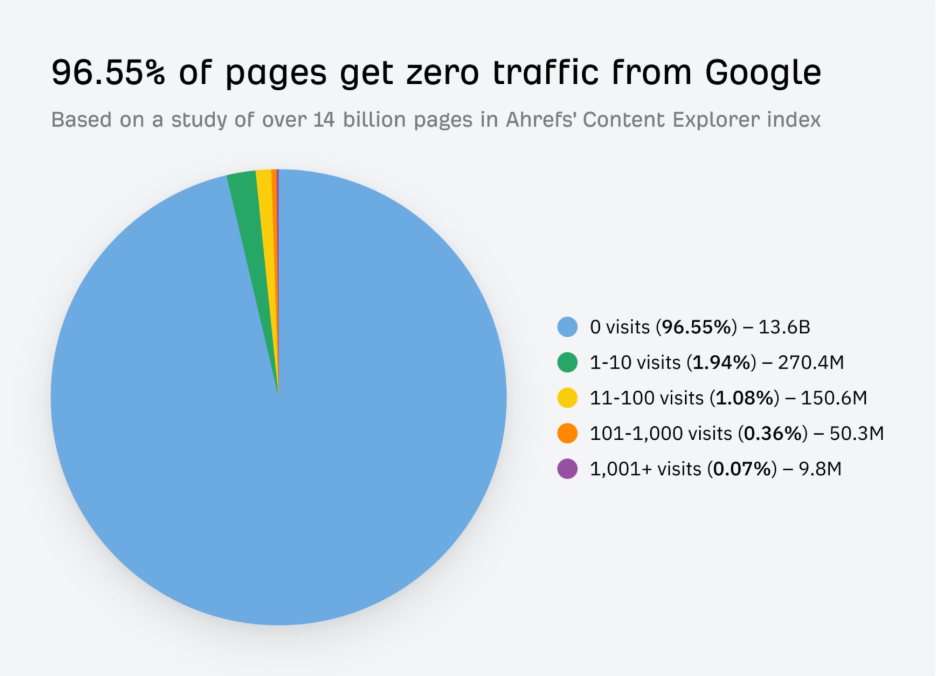
According to a study conducted by Ahrefs, approximately 96.55% of pages do not get an organic visit through search, and this highlights the challenge of being visible when the page content cannot be understood easily by search systems.
Structured data presents a viable option since it can assist search engines and AI models to learn the context of information based on the meaning and not the words themselves. When applied correctly, it enhances the interpretation of content and its surfacing in AI responses.
This blog discusses how to use structured data to appear in AI search answers and what it is that actually accomplishes content being drawn into AI responses.
What Is Structured Data?
Structured data is a standardized means of organizing data in a manner that is easily understandable by an AI system. Websites do not contain only text data, but also contain additional data that is marked and highlighted in a specific area of the webpage.
This data is highlighted in a manner that is easily understandable by artificial intelligence. The data may contain information about products, the author of the content, reviews, and frequently asked questions.
Structured data is usually implemented in the website code in the JSON-LD format. This is the most commonly used data format. However, there is an additional option of using the Microdata and RDFa data formats.
The ability to understand how to use structured data to appear in AI search answers is an important factor in ensuring that the data is organized in a manner that is easily understandable by artificial intelligence.
Why Structured Data Matters for AI Search
AI search engines use clarity and context to analyze information correctly. Algorithms can identify important information without an assumption-based backup, provided the content contains structured data. This enhances knowledge organization and the provision of credible answers by AI systems.
The significance of structured data is better understood in the context of entity relationships in systems such as the Google Knowledge Graph, which provides a map of connections between subjects, brands, and individuals. In the absence of any structured signals, AI will have to rely on less accurate interpretations of plain text.
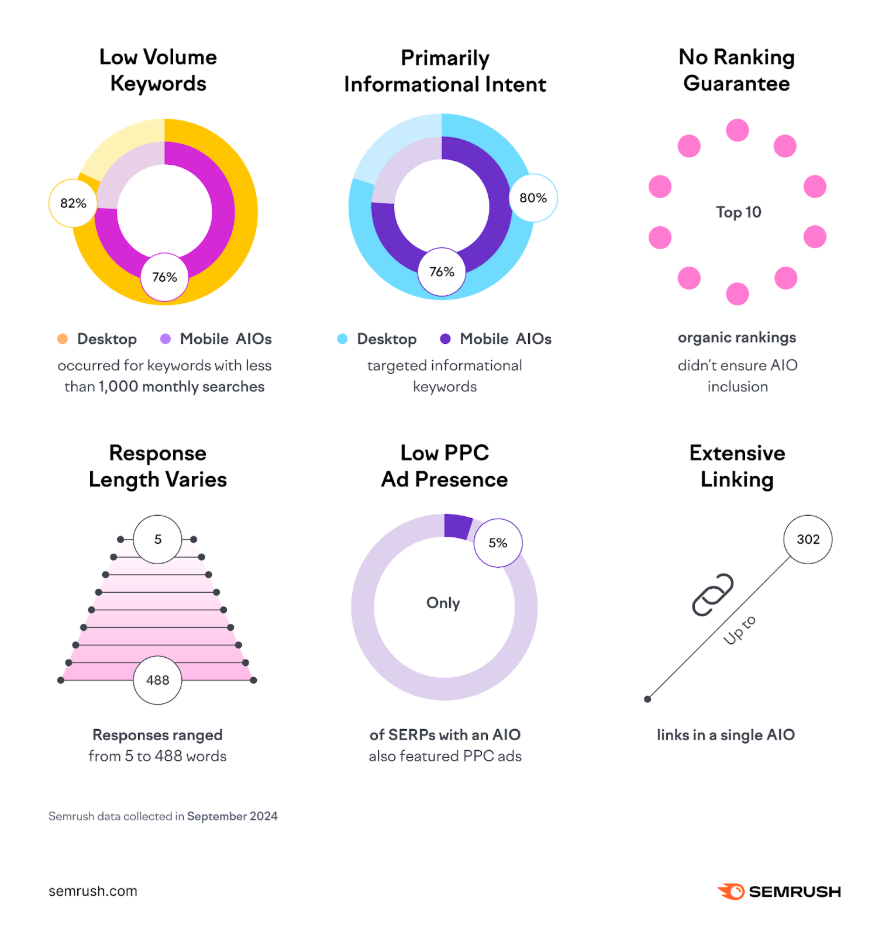
In a study by Semrush, which analyzed 200,000 keywords, 80% of AI Overviews are shown when informational search queries are made, indicating how an AI system considers the structured, explanatory text in order to produce the answer.
How AI Systems Use Structured Data to Generate Answers
AI systems analyze content by identifying entities, relationships, and factual information across large datasets. Structured data simplifies this process by presenting key details in a format that AI systems can interpret quickly. Instead of analyzing entire paragraphs, AI can locate labeled information such as definitions, ratings, or instructions more efficiently.
Structured signals also help AI validate information by comparing it with similar structured data from other sources on the web. When consistent signals appear across multiple pages, the information becomes more reliable for generating answers. Since AI tools prioritize concise responses, clearly organized data increases the chances that specific facts or explanations will be selected.
Types of Structured Data That Increase Your Chances of Appearing in AI Answers
Some structured data formats help AI systems understand and extract information more easily than others. Implementing schemas that clearly organize questions, instructions, products, and entities significantly improves your chances of how to use structured data to appear in AI search answers.
1. FAQ Schema
The FAQ schema organizes questions and answers in a structured format that search systems can interpret quickly. By clearly labeling both elements, AI tools can easily extract direct responses that match conversational queries.
This format aligns well with how AI platforms deliver answers, since many user searches are question-based.

According to Backlinko, pages using schema markup appear in about 36.4% of voice search results, illustrating how structured formats such as FAQ content are more likely to be used by AI and search systems to deliver direct answers.
2. How-To Schema
How-to schema structures the instructional content into specific steps, which search engines are then able to interpret the order of the actions on a webpage. The details can be noted in each step with the tools, instructions, and outcomes.
Since a significant number of searches require researchers to solve problems or fulfill requirements, AI systems tend to give preference to structured instructional content. Clear step-based markup assists AI in deriving brief instructions on tutorials, guides, and education materials.
3. Article Schema
The article schema contains metadata regarding editorial material, including the headline, author, and date of publication. This information assists search systems in comprehending the context and origin of the content.
AI usually puts credibility and authorship signals into consideration when it is generating answers. Organized information about the articles thus enhances clarity and aids in correlating the information with known subjects and topics.
4. Product Schema
Product schema organizes the most important data, including price, availability, ratings, and reviews. This structured format enables AI systems to get the details about products without having to read long descriptions.
AI tools often provide a summary of product characteristics and comparisons when they are generating shopping-related responses. Organized product information assists them in deriving credible information that affects purchasing decisions.
5. Organization and Person Schema
Organization and person schema determine the entities of the content on a website. These templates contain information such as company name, author data, and social accounts.
Entity signals are used to assist search systems in determining credibility and relating the content to larger knowledge graphs. This enhances the capability of AI systems to identify expertise and authority in a particular subject.
6. Review and Rating Schema
The structure of feedback on review and rating schema is based on elements such as star ratings, review counts, and user comments. This markup assists search systems in understanding customer sentiment quickly.
AI systems tend to depend on aggregate signals when considering products or services. Structured review data provides quantifiable measures of quality that can be included by AI during the summarization of recommendations.
Best Practices for Structured Data in the AI Search Era

To effectively implement structured data, it is necessary to do more than put markup in a page. Structured data is the most significant practice that should be aligned with the real content on the page. Search systems can rely on the signals displayed when markup is an accurate representation of visible information.
The other important practice is concentrating on meaningful entities. Rather than indicating each and every element on a page, websites in the future need to emphasize information that explains topics, relations, and attributes.
By observing best practices in how to use structured data to appear in AI search answers, it ensures that markup increases understanding instead of causing unnecessary complexity.
The other important thing is consistency. Structured data must be in standardized forms in order to make the search systems understand the data. Structured signals can be used together with high-quality content to build a concise structure through which AI systems can process and generalize information effectively.
Common Structured Data Mistakes to Avoid
Search visibility can be enhanced by structured data, yet the implementation errors tend to lessen its efficiency. The following errors often make search engines and AI systems unable to recognize structured information.
- Inclusion of markup that does not match the visible content on the page, thereby making the search systems ignore the formatted cues
- Application of the wrong type of schema to the content, such as applying product schema to an informational page, can be confusing to the algorithm
- Lack of necessary properties or fields in the markup makes search engines unable to comprehend the data completely
- Wrong formatting or syntax mistakes in the code disrupt the structured data implementation
- Not checking the markup with the help of tools such as Google Rich Results Test prior to publication
The Future of Structured Data in AI Search
The search technology is shifting towards meaning-based systems instead of merely matching keywords. With a greater level of integration of AI models in search experiences, structured data is going to possibly have a greater influence on the way information is structured and accessed.
One of the causes of this change is the growing significance of entities. AI systems depend on links among subjects, organizations, and products to come up with sensible responses. This structured data is useful in defining those connections that enhance how machines comprehend the content on the web.
Moreover, generative search experiences require information that can be automatically extracted and encapsulated. Structured markup makes information clearer and easier for AI systems to process. With AI having an increasing influence on search behavior, the more websites organize their information, the more likely they are to be included in AI-generated responses.
Structuring Content for the AI Search Landscape
AI search systems depend on clarity, context, and reliable signals when generating answers. Structured data provides the framework that helps machines interpret information accurately and connect it with relevant entities.
By labeling content elements such as FAQs, products, authors, and organizations, websites make their information easier for AI systems to extract and summarize. This structured approach does not replace strong content but instead enhances how that content is understood.
As generative search continues to evolve, websites that organize information clearly will gain an advantage in visibility. Implementing structured data thoughtfully, therefore, becomes a practical step toward ensuring that valuable insights are recognized and surfaced within AI-generated answers.


