

Key Takeaways
- A broken link is a hyperlink that leads to a non-existent page, and dead pages appear everywhere.
- Broken link building for beginners is effective because it provides tangible value to the website owner first, before requesting a favor in return.
- Finding broken links requires the right tools, such as Ahrefs’ Content Explorer, Semrush’s Backlink Audit, or free browser extensions like Check My Links.
- Your replacement content needs to be closely related to the page that was removed and to the same depth; otherwise, the site owner has little incentive to change the link.
- Outreach emails are far less successful than most beginners think, and personalization and follow-ups are more important than numbers.
- It’s patience and consistency that distinguish those marketers who get results from those who give up after receiving a single email that wasn’t opened.
Have you ever spent hours creating content and building backlinks, only to feel like your website still isn’t getting the authority it deserves? It can be frustrating to put in so much effort while competitors continue to outrank you.
The good news is that valuable backlink opportunities often exist where most people never think to look. Every day, websites delete pages, reorganize content, or change URLs. However, other websites don’t always update the links pointing to those old pages, leaving behind broken links that no longer lead anywhere.
That’s where the opportunity begins. Instead of chasing website owners for random backlinks, you can help them fix a problem while earning a relevant backlink in return. Considering that 66.5% of links acquired over the last nine years have become broken, according to Ahrefs, thousands of websites are still linking to content that no longer exists.
Whether you’re just getting started with SEO or looking to improve your existing link-building strategy, this guide will walk you through everything you need to know about broken link building for beginners. You’ll learn how to find broken link opportunities, create replacement content that site owners actually want, and use outreach strategies that can turn dead links into valuable backlinks.
What Is Broken Link Building, Exactly?

Broken link building involves locating a broken link (typically a 404 error or a discontinued site) on another site and offering your site as an alternative. This is good for the site owner, as they have solved a problem, and for you, as you have acquired a relevant backlink.
This is not a cold outreach approach, which is simply asking someone to add a link in order to have one; instead, this approach starts with a solution. The first thing you need to understand when you start broken link building for beginners is that you’re calling out the problem and providing the solution simultaneously.
Why Broken Link Building Is Still Working
The question is whether or not this approach is relevant in the ever-evolving search landscape.
Yes, and there’s proof to support that.
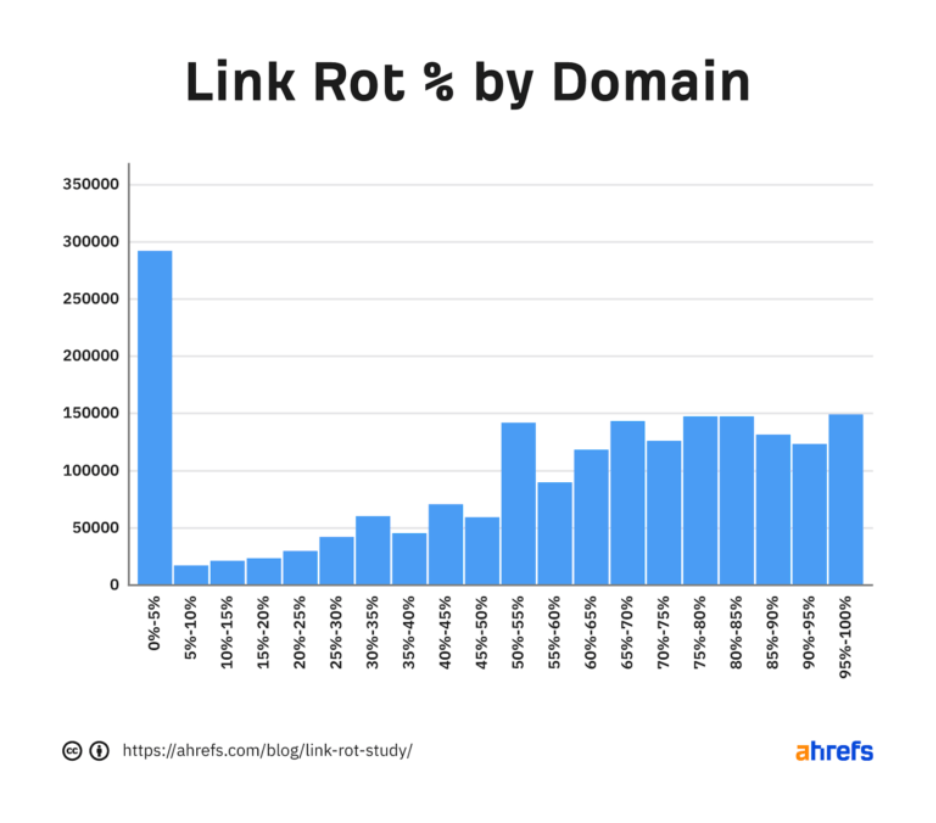
According to Ahrefs’ research, more than half of the older links are already broken, meaning there’s always a fresh stream of link opportunities in almost every niche.
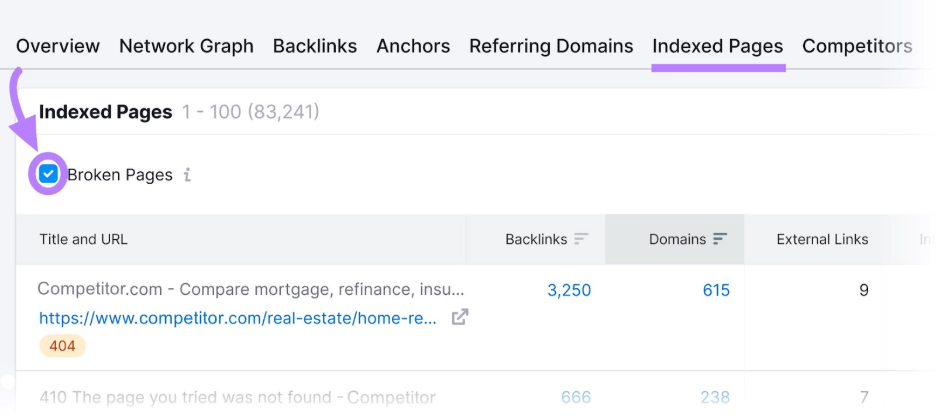
Further research on this tactic reveals that broken link building can yield a higher rate of success than many other tactics simply because you’re helping a webmaster solve a problem, not asking for a favor.
That pitch resonates more with site owners who are pressed for time. Once you’ve got the hang of broken link building for beginners, you will find that you are not as lucky as it may seem and that much of your success depends on how close your replacement content is to the original.
How To Find Broken Links
First, you have to be able to identify dead pages in your niche, and before you can do that, you need to know how to. There are some methods that are good for beginners.
1. Use Backlink Analysis Tool
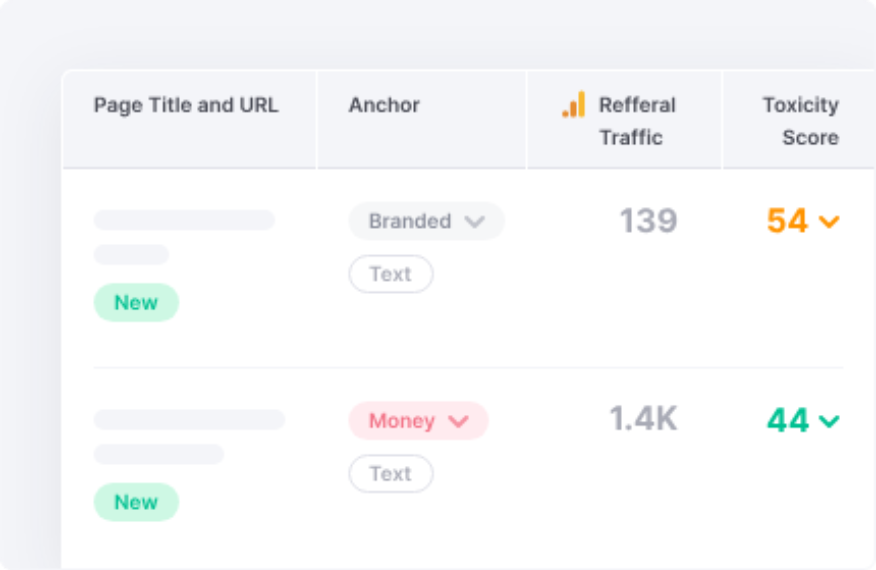
Ahrefs’ Content Explorer allows you to search for topics and restrict the results to just broken pages with the number of referring domains that still link to them. Semrush does something similar with its Backlink Audit tool, where you enter a competitor’s domain and add a ‘Broken Pages’ filter to view who’s still linking to content that no longer exists.
2. Manual Check Of Resource Pages
Many of the sites, particularly in education, nonprofit, and niche business, have curated resource pages. Nobody revisits these, and they’ve been around for the past few years and have plenty of outdated links.
3. Use Browser Extensions That Are Available For Free
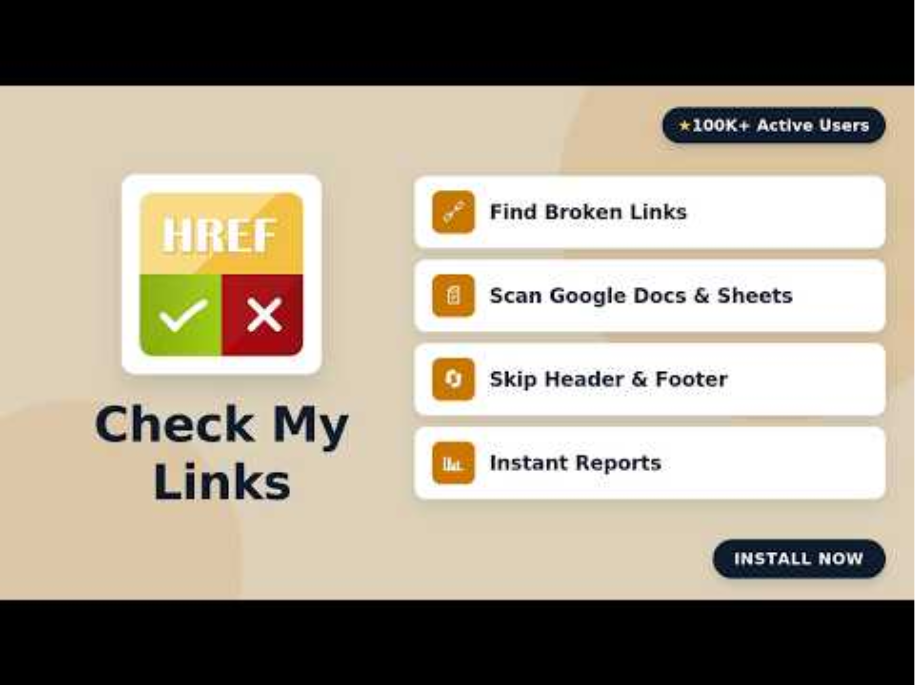
Once you have made the list of your target sites, you can use tools such as Check My Links to scan a webpage and immediately identify broken links.
4. Verify with Archive.org
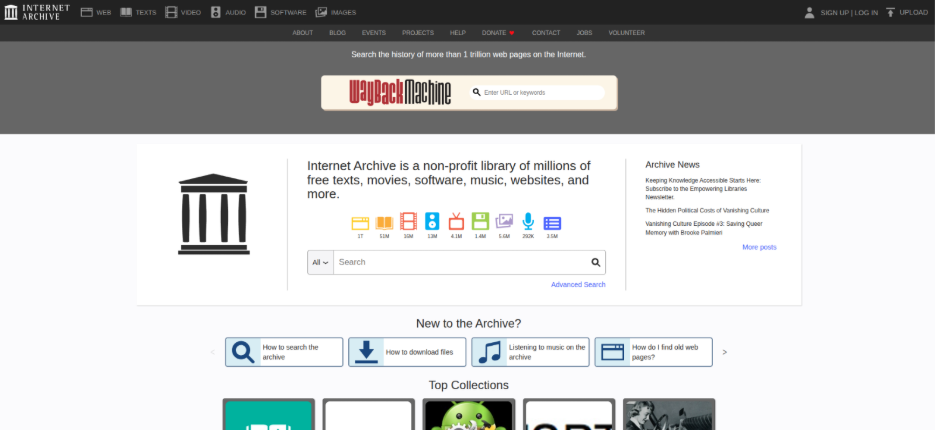
Once you find a broken link, check what the page used to contain via the Wayback Machine. This means to indicate what makes it that link, for your replacement to match or exceed it.
This is the research-heavy phase of broken link building for beginners, and it’s important to take your time here, or you’ll be looking at irrelevant pitches later on.
Creating Content That Deserves The Link
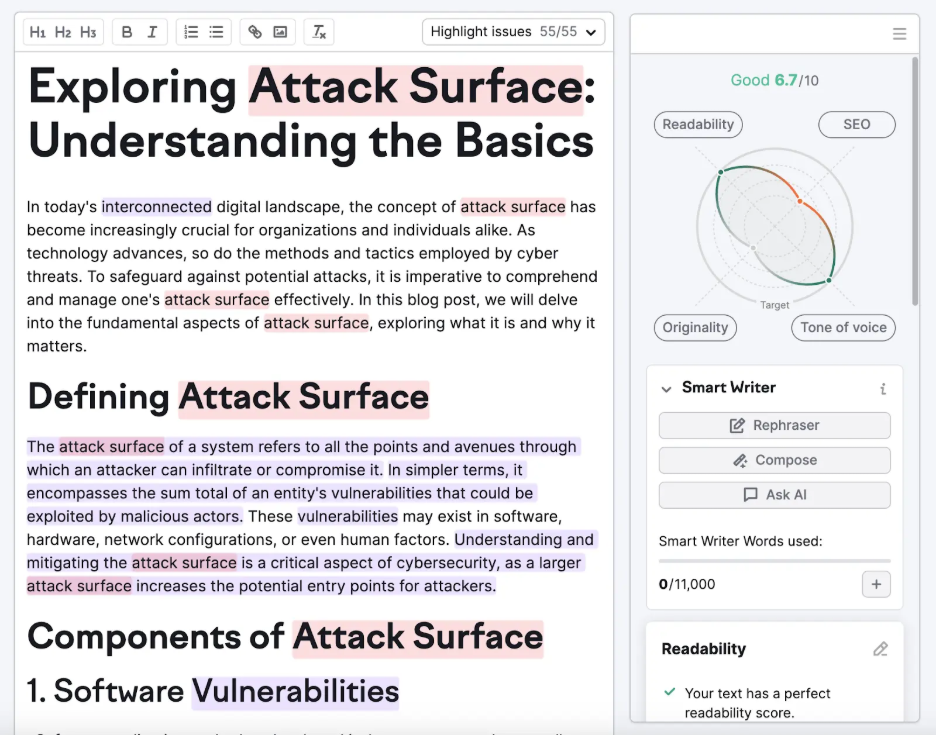
When you find an interesting broken link, don’t rush to pitch right away. If there is no existing content that fits, make some that is similar to or better than what was there. Examine the structure, depth, and angle of the dead page in the archived version of the page.
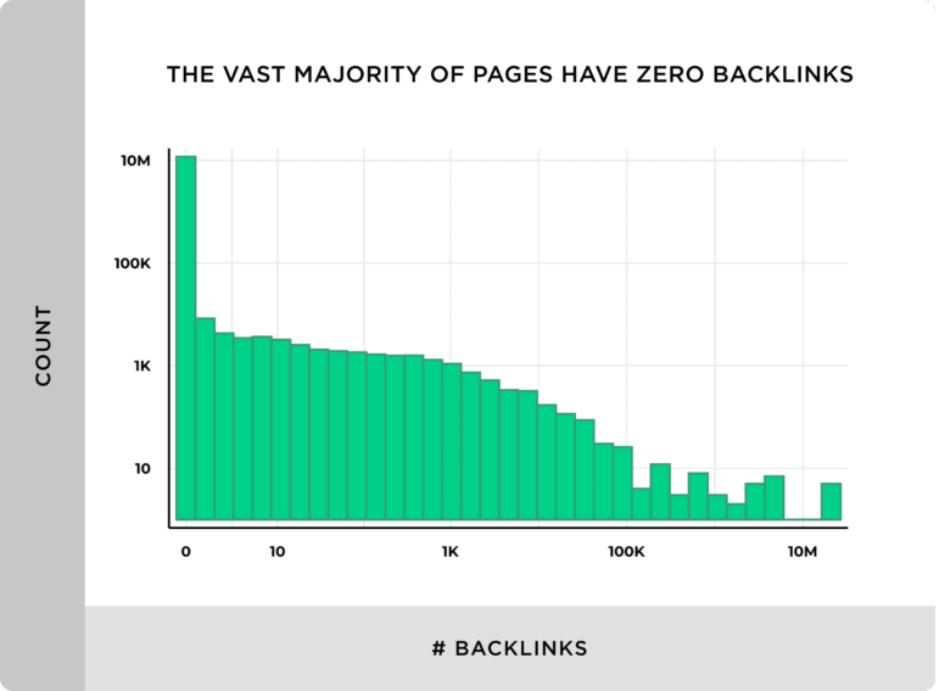
As research tells us, longer, more in-depth articles are likely to receive more links than shorter articles are, and that’s because it is easier for site owners to replace a dead link with something that helped them more than the article they’re replacing.
Consider this step as a measure of quality control before you begin outreach, since it is an important part of broken link building for beginners.
Writing Outreach Emails That Actually Get Replies
This is where many beginners simply stall out, primarily due to the mismatch of expectations and reality.
Sending out the same general email to dozens of sites at once generally has a negative effect — a 2024 outreach guide warns against using the same generic or spammy template, because webmasters can see the general language within minutes and it won’t get a positive response.
When you know this at the beginning, you can plan accordingly and not be disappointed if you don’t hear back from the first few emails you send. Here are some practices that can always help your chances:
- Don’t make the email too long. In a few sentences, state the broken link, where it is on the page, and what you think it should be replaced with.
- Personalize the greeting. When you mention something specifically related to their site, you give the impression you didn’t send the same message to hundreds of people.
- Make it easy to say YES. Provide the complete URL they need, so they do not have to do additional work.
- Contact them again once, in a courteous manner. Often, a second email message arrives about a week later and garners a response that the first message failed to elicit.
Backlinking is still worthwhile because Search Engine Journal lists it among the top things search engines consider when assessing page authority. Familiarity with rejections, or more commonly, silence, is just a part of the broken link building for beginners process.
Common Mistakes Beginners Should Avoid
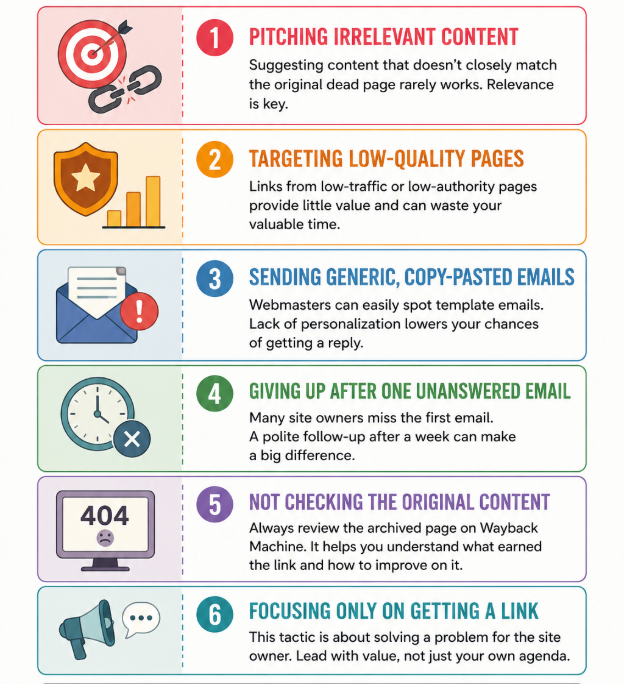
A few missteps show up again and again among people trying this tactic for the first time. Pitching content that only loosely relates to the original dead page rarely works, since site owners can tell when a suggestion feels forced.
Targeting low-quality or low-traffic pages wastes effort too, because a link from an obscure page carries little weight. Sending generic, copy-pasted emails to dozens of sites at once tends to backfire, as webmasters can spot template language almost immediately.
Giving up after one unanswered email overlooks how much of this process depends on timing. Avoiding these pitfalls early will save considerable time as you build experience with broken link building for beginners.
Broken Link Building Compared To Other Link Tactics
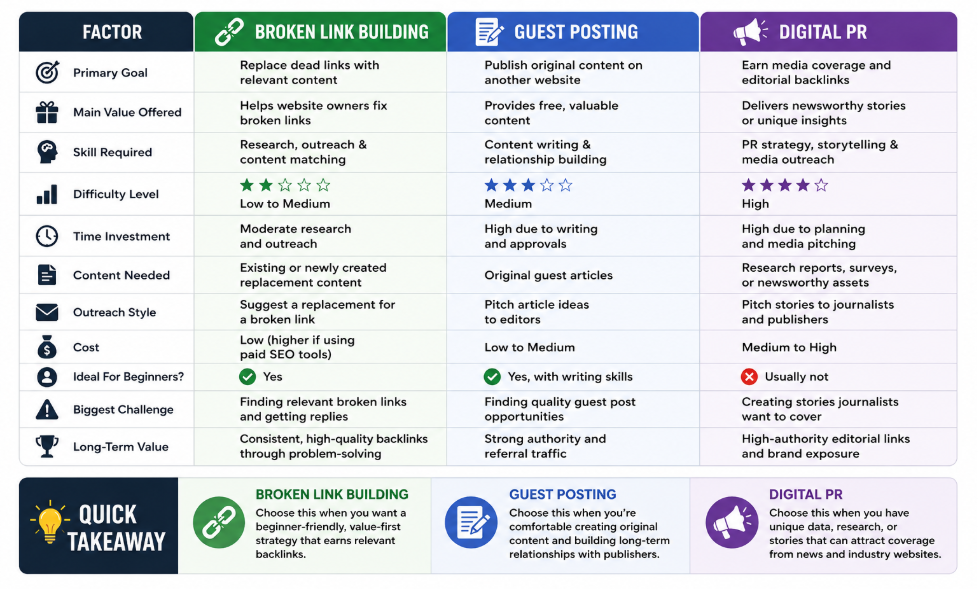
It helps to see where this method fits alongside other approaches. Guest posting requires ongoing content creation and relationship building, while digital PR depends heavily on timely, newsworthy angles that journalists want to cover.
Broken link building, by comparison, relies on research and pattern recognition rather than pitching a brand-new story. That makes it a practical entry point for anyone new to link building, since the value proposition is easy for site owners to evaluate quickly. It also pairs well as a supporting tactic alongside guest posts, rather than being the only method in your toolkit.
Every Dead Link Is A Second Chance Waiting To Be Claimed
Broken link building rewards patience over speed, and that’s what makes it accessible to someone just starting out in SEO. You don’t need a huge budget or a large team, only a methodical process: find the dead links, build content worth linking to, and reach out with a message that respects the site owner’s time.
Each successful placement adds real, earned authority to your site. As you keep refining your research and outreach, this approach to broken link building for beginners becomes less about chasing links and more about solving small problems for the sites you approach, one dead link at a time.
Ready to build high-quality backlinks the right way?
Start applying these broken link building strategies today and turn dead links into lasting SEO opportunities.
FAQs
1. Is broken link building still effective right now?
Yes. Dead links keep piling up across nearly every niche, so there’s a steady supply of opportunities. For anyone weighing where to start, broken link building for beginners works best as one part of a broader strategy, not the sole tactic.
2. How long does it take to see results?
Most campaigns take several weeks to months, depending on how many quality prospects you reach out to and how relevant your replacement content is.
3. Do I need paid tools to get started?
No. Free options like Check My Links and Archive.org work fine, though paid tools like Ahrefs or Semrush speed up research as you scale.
4. What if I don’t have matching content yet?
Create it before reaching out. Pitching a link before the content exists rarely works and can damage your credibility with that site owner.
5. Is this tactic considered white hat?
Yes, as long as your replacement content is genuinely relevant and valuable. It only becomes problematic when marketers spam irrelevant links to manipulate rankings.

About the author: Vibhav Gaur, Business Head
Vibhav Gaur leads strategic operations and business growth at the organization. With a strong background in digital transformation and customer-focused solutions, he has helped numerous clients streamline their web presence and scale efficiently. His leadership ensures seamless execution across teams, with a commitment to delivering results and fostering innovation in every project.


